Managing Social Anxiety and the Fear of Negative Evaluation
Living or working in a semi-rural community has distinct advantages, but when you experience social anxiety, a close-knit area can amplify the pressure to maintain appearances. Whether it involves attending a local event in West Malling where you anticipate bumping into familiar faces, or managing a presentation in front of colleagues, the fear of negative evaluation can dominate your week.
Social anxiety goes far beyond everyday shyness. It is characterised by an intense, persistent fear of being judged, embarrassed or scrutinised by others. This heightened self-consciousness often leads to social avoidance, which provides temporary relief but ultimately reinforces the anxiety over time.
The spotlight effect in semi-rural communities
A core feature of social anxiety is a psychological phenomenon known as the spotlight effect. This is the ingrained belief that other people are paying far more attention to our flaws, mistakes or physical appearance than they actually are. In towns and villages where professional and personal circles frequently overlap, this effect can feel particularly acute.
When you worry that a minor stumble over your words will be remembered and judged by the local community, social interactions stop being casual conversations. Instead, the mind treats them as high-stakes performances where any error will lead to lasting embarrassment or rejection.
Understanding anticipatory dread
For adults dealing with social anxiety, the distress usually begins long before the actual event takes place. A work meeting scheduled for Thursday might start causing sleeplessness by Tuesday. Cognitive behavioural therapy identifies this build-up as anticipatory dread.
During this waiting period, the brain generates vivid predictions of social failure. You might imagine losing your train of thought, blushing visibly, or having nothing interesting to say. Because the brain struggles to distinguish between an imagined threat and a real one, your body responds with genuine stress hormones, making you feel exhausted before the social event has even begun.
How cognitive behavioural therapy addresses social anxiety
CBT therapy Kent focuses on the link between our thoughts, our physical feelings and our behaviours. Rather than simply trying to force positive thinking, cognitive behavioural therapy looks at the evidence for your fears.
A key technique is cognitive restructuring. If your automatic thought is that everyone will notice your hands shaking during a presentation and assume you are incompetent, your therapist helps you examine whether that is a realistic outcome. Together, you look at alternative, more balanced perspectives. You learn to recognise when you are mind-reading, which is assuming you know exactly what others are thinking about you, or catastrophising, which is believing the worst possible outcome is guaranteed.
The physical impact of intense self-consciousness
Social anxiety triggers a very real physical response. A racing heart, sweating, blushing, or a tremor in your voice are common signs of adrenaline. The difficulty arises when we misinterpret these normal stress responses as visible proof that we are failing socially.
CBT helps break the cycle where noticing your own physical symptoms makes you panic about them, which in turn makes the symptoms more pronounced. By learning to accept these physical sensations rather than fighting them, the adrenaline response naturally begins to subside.
Using gradual exposure to build confidence
Avoidance is the most common coping mechanism for social anxiety, but it maintains the fear. To counter this, CBT uses graded exposure. This is a structured, evidence-based approach to facing feared situations.
Gradual exposure is highly tailored to the individual. No one is forced into a terrifying situation. Instead, you and your therapist create a hierarchy of social challenges, starting with something mildly uncomfortable and slowly working up to more difficult scenarios. A first step might involve making brief eye contact with a cashier, while a later step might involve speaking up in a larger group setting. By systematically testing these situations, you gather real-world evidence that you can handle social interactions and that the catastrophic outcomes you feared rarely happen.
Dropping safety behaviours
Even when people with social anxiety do attend events, they often rely on safety behaviours to get through them. These are subtle habits designed to prevent embarrassment. Examples include:
- Mentally rehearsing sentences before speaking
- Avoiding eye contact
- Standing on the edge of the room to avoid drawing attention
- Holding a drink tightly to hide shaking hands
- Asking constant questions to keep the focus on the other person
While these habits seem protective, they actually keep you trapped in a state of high alert. Dropping these safety behaviours is a crucial part of cognitive behavioural therapy, allowing you to engage in conversations more naturally and discover that you are capable of coping without a script.
Choosing CBT and counselling in West Malling
If intense self-consciousness is limiting your personal life or holding back your career, professional support offers a structured way to reduce the pressure. We provide individual counselling Kent and CBT for adults facing social anxiety, with options to suit your preferences.
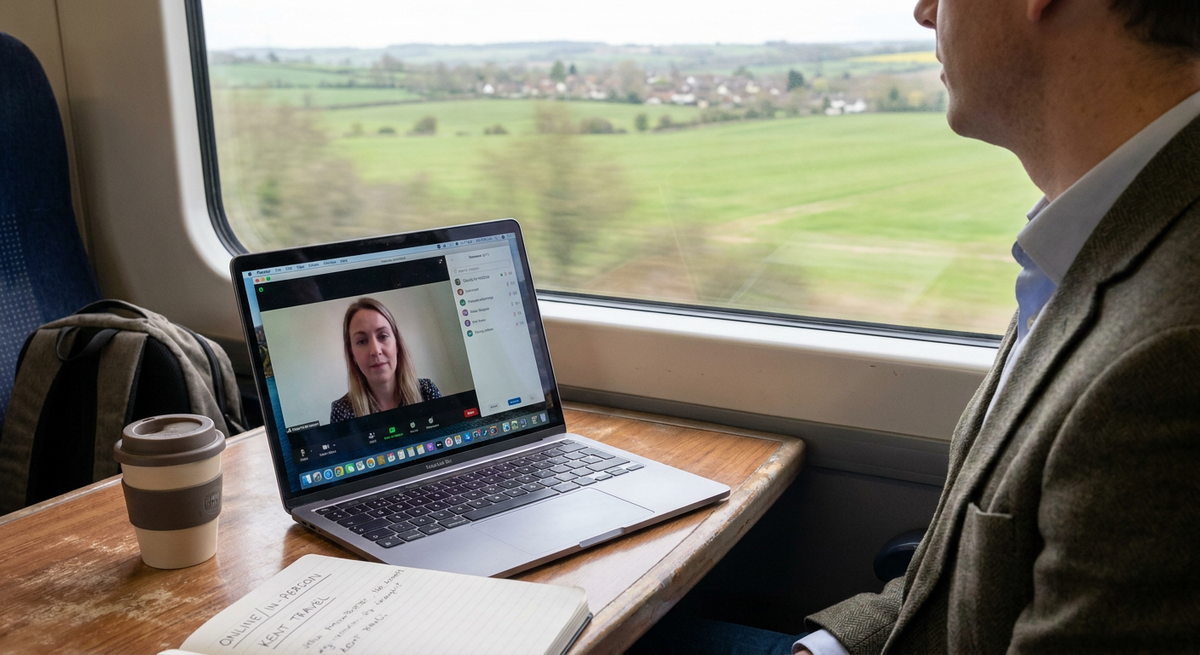
You can attend sessions face-to-face in West Malling, or choose online video sessions if you prefer the convenience of accessing support from home. We operate on a session-by-session basis with no long-term commitment required. The fee is £68 for a full 60-minute session.
To start, you can read our therapist profiles, watch their short introductory videos, and check their current availability. Once you find a therapist who matches your needs, you can book your first session directly online at a time that suits you.
Sian Jones, Founder of CBT & Counselling Kent and professional counsellor.